Playing Adult. Boston Gallery, June 2009.
Exhibit Notes:
Games of Life
Playing Adult, Stephanie Lopez’s third solo exhibition of works in
sculpture and installation, threads the fine lines between fantasy and
reality, between entertainment and reflection. The works allude to and
take off from the “games that we adults play”: a collection of
three-dimensional and interactive pieces straddling the nuances of the
daily game of life.
In the show, Lopez draws central images from popular games and toys
associated with the innocent days of childhood and growing up–dolls,
board games, for instance—and juxtaposes these installations with
content and messages that denote the awakening to life’s harsher and
more complex realities. Far from being child-appropriate, the works
denote the mechanics and realities of growing up: the phases of
“experiencing disillusionment, despair, rejection, regret,
self-denial, the drag and seeming pointlessness of having to wake
up-work-eat-sleep-wake up-work-eat-sleep and wake up again”, as the
artist herself expresses it.
In Playing Adult, Lopez creates toys that deal with grown-up realities
and issues, spanning the personal and political, philosophical and
practical. In her Transparency series, for instance, she utilizes the
concept of doll’s clothing to demonstrate the idea of unveiling and
laying bare as a matter of honesty. The term transparency thus takes
on different meanings: not just transparency as a quality of form and
visual perception, but honesty to one’s partners, constituents,
colleagues. Lopez takes on the concept of transparency to reveal
contradictions within modern images of women: the wild in the
conservative, and the oppressive in the modern.
Many of Lopez’s works also deal with the contradictions of the
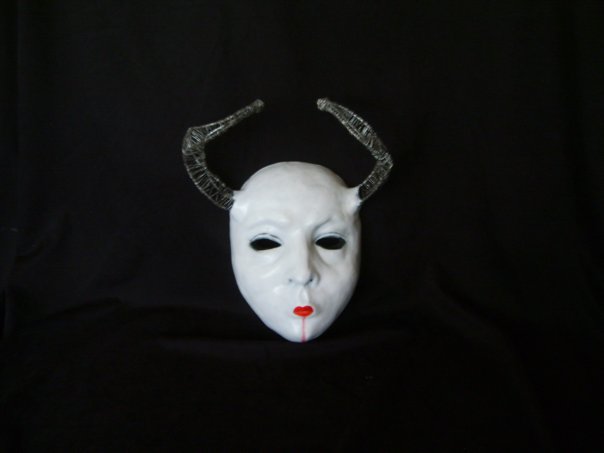
everyday, simmering beneath the surface. Invincibility is demon-mask
to be worn as a means of hiding one’s vulnerabilities, a literal way
of masking oneself. What Ifs, meanwhile, are a commentary on double
scenarios and outcomes that confront oneself during moments of
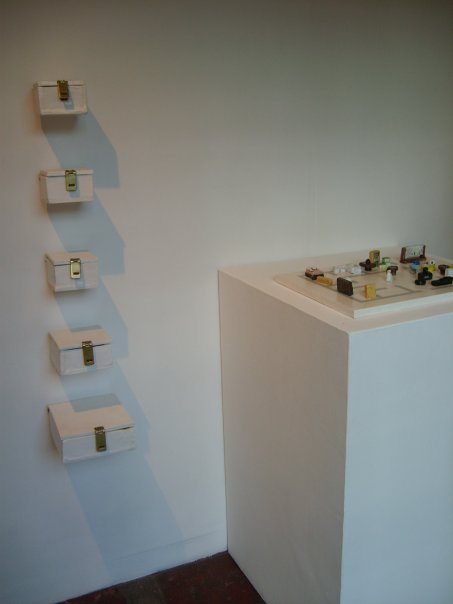
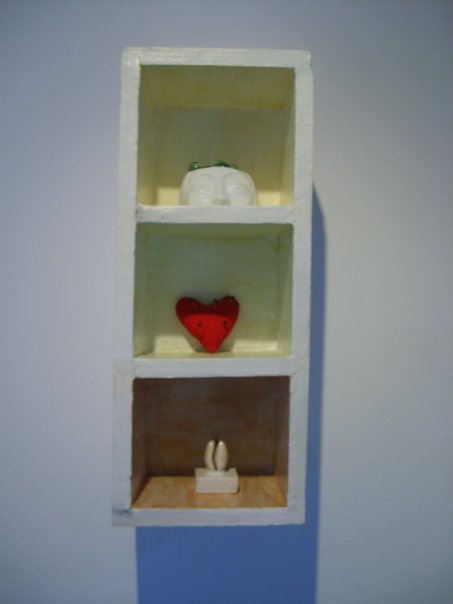
ambivalence. Segregation also presents the irony of
compartmentalization in modern life: in separating life into
fragments, one loses the sense of wholeness that can only be achieved
through processing and synthesizing one’s experiences as a whole.
Damage Control speaks on how people’s idealized perceptions may open
up to a tarnished interior, if one looks closely enough.
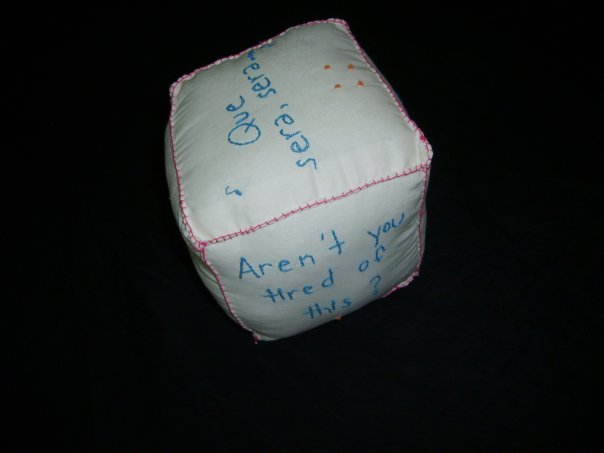
Lopez appropriates popular toys and games, normally used for mere
entertainment and fun, and distills in them lessons on living. Going
Against the Odds, a merger between the ubiquitous ‘Fortune 8 Ball’ and
dice, speaks of the extremes that people swing between in times of
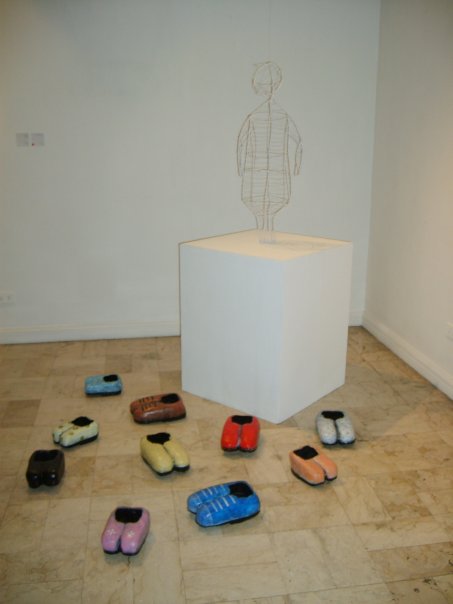
adversity: hope and denial. Always in Others’ Shoes, is a cautionary
piece, alluding to the common adage, but also reflecting on the
outcomes one’s sense of self in one always puts oneself in too many
shoes.
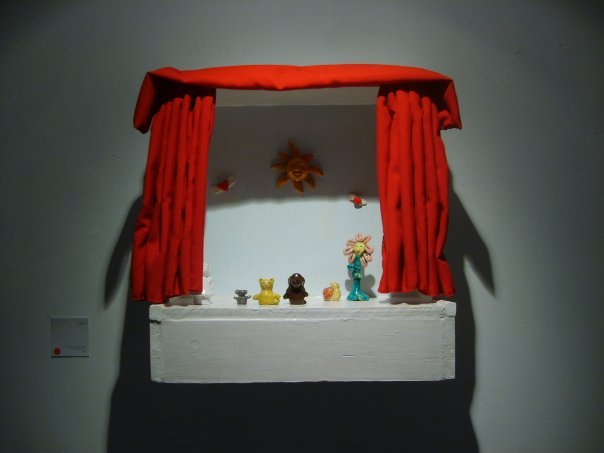
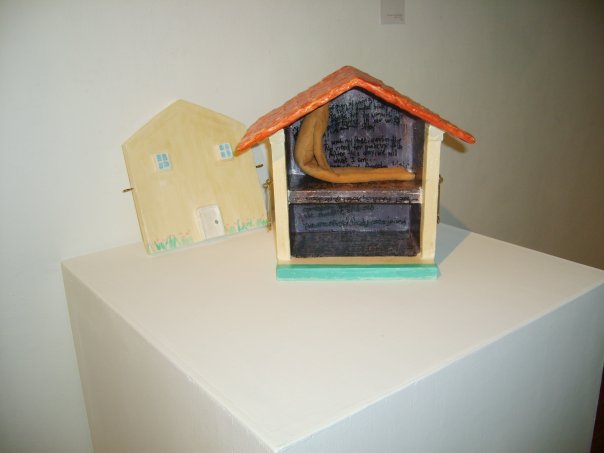
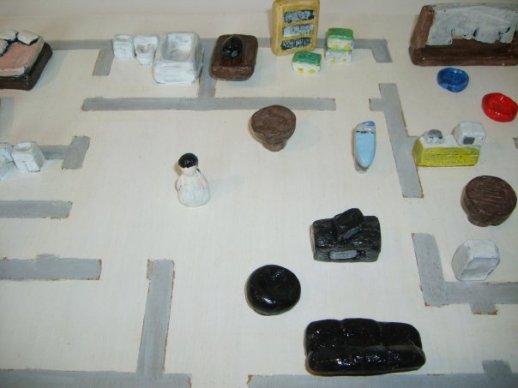
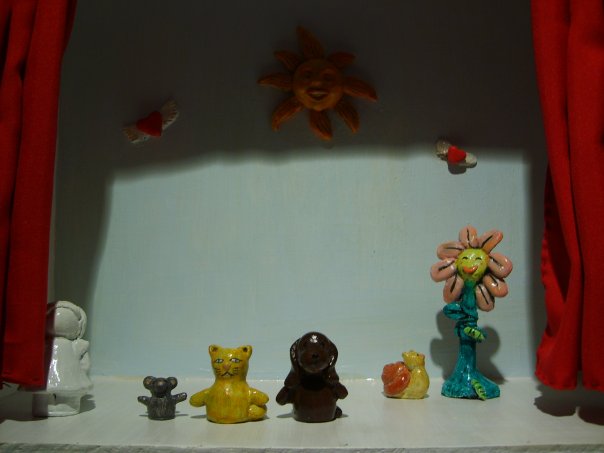
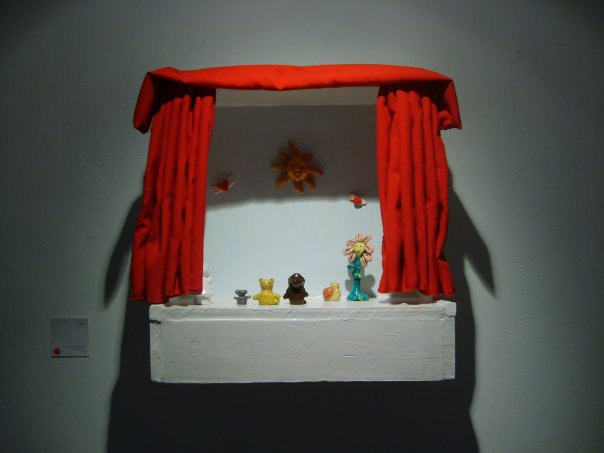
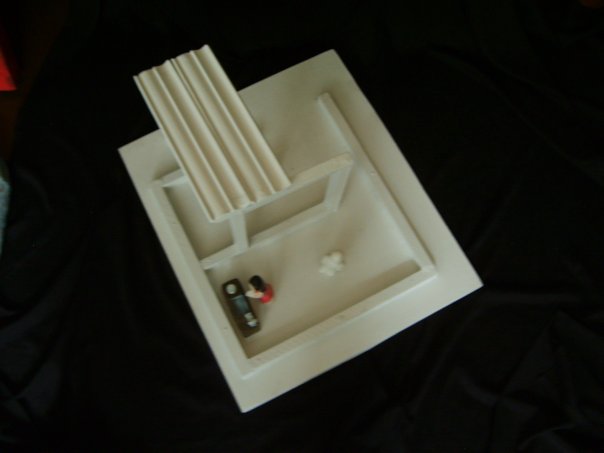
Some works also deal with the literal and figurative spaces inhabited
by adults. Palabas, for instance, conceives the world as an entire
stage where we are actors and characters, regardless of whether we
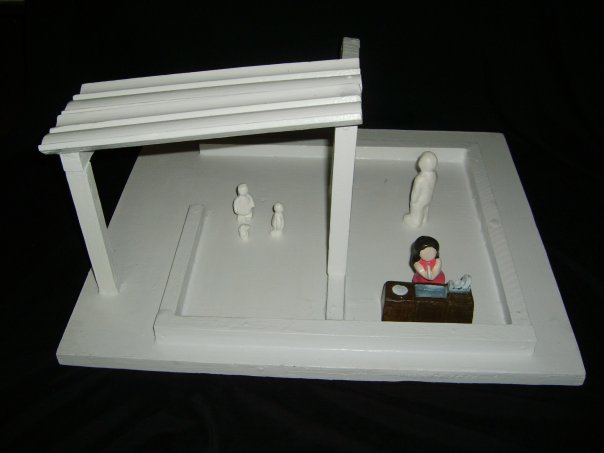
choose to be part of the production or not. Meanwhile, Making Room
examines the process of allowing more people to enter our lives and
intervene symbolically in the ways that we arrange it.
– Lisa Ito
 STEPH LOPEZ ART
Leave a comment